7 Easy Ways to Make Middle School Math Practice More Engaging
Practice problems is an everyday part of teaching math class. But handing out another worksheet with 20 problems isn't always the best way to get students excited about doing that practice.
The good news? Making math practice more engaging doesn't have to mean creating an elaborate game, spending hours prepping an activity, or completely changing your lesson plans.
Some of my favorite ways to mix up math practice are pretty simple. Many take just a few minutes to set up and can be used with the worksheet, textbook problems, or practice questions you already have.
Here are 7 easy ways to make math practice more engaging that you can try in your classroom right away.
1. Turn Regular Problems Into a Math Scavenger Hunt
This was always one of my favorite ways to take completely ordinary math practice and make it feel like something different.
And it really can be as simple as cutting up a worksheet.
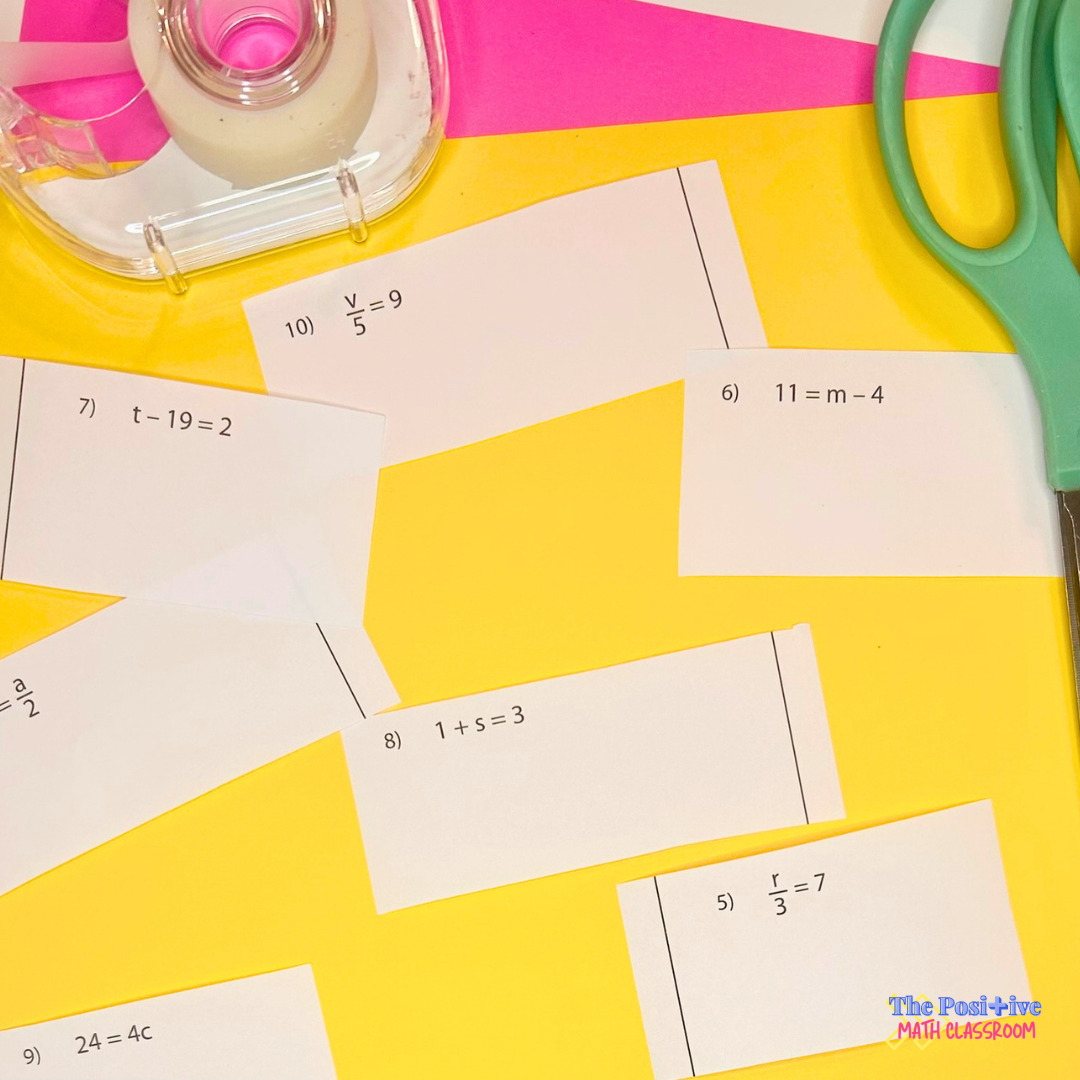
Take the problems students would normally complete at their desks, cut them apart, and tape them around the classroom. Give students a recording sheet or have them number a piece of notebook paper and let them move around the room solving the problems.
No worksheet to cut up? Grab some sticky notes and write problems from the textbook on them instead.
Students are essentially doing the exact same math practice from the textbook, but now they're up, moving, and working through the problems at their own pace.
Keep it simple:
Cut a worksheet into individual problems.
Number the problems.
Post them around the classroom (I would also do 1 or 2 in the hallway).
Have students solve them on a recording sheet or notebook paper.
You don't necessarily need 20 different problems, just posting 8–10 problems around the room can give students meaningful practice without requiring a ton of preparation.
2. Use Error Analysis
Instead of always asking students to solve a problem, sometimes give them a problem that's already been solved incorrectly.
Then ask: Where did the student make a mistake?
Students have to identify the error, explain why it is incorrect, and show how to solve the problem correctly.
For example, instead of simply asking students to solve:
-7 + 12
show them:
-7 + 12 = -19
What mistake did this student make? Explain and correct the answer.
Error analysis changes the thinking involved. Students aren't simply following a procedure. They have to slow down and think about why the procedure works. This method of problems helps to solidify students understanding of the skill they are learning.
This strategy is great to use as:
A warm-up
Partner discussion
Small-group activity
Exit ticket
Review before a quiz
And it requires very little prep.
3. Let Students Choose Their Problems
Sometimes engagement can be as simple as giving students a little bit of choice.
Instead of saying:
Complete problems 1–15.
try: Choose any 10 problems to complete.
Or divide the problems into groups:
Section A: Practice
Section B: On-Level
Section C: Challenge
Then give students requirements such as: Choose 8 problems. At least 2 must come from the Challenge section.
You're still deciding what skills students need to practice, but students get some ownership over how they complete that practice.
This works especially well if you have students who tend to shut down when they see a page packed with problems.
4. Try a One-Problem Exit Ticket
An exit ticket doesn't need five questions to tell you whether students understood today's lesson.
Sometimes one carefully selected problem is enough.
Choose a problem that represents the most important skill from the day's lesson and have students complete it before leaving.
I also like adding a quick self-assessment. Students could rate using a number system how they understood the problem.
3: I've got it.
2: I mostly understand, but could use more practice.
1: I'm still confused.
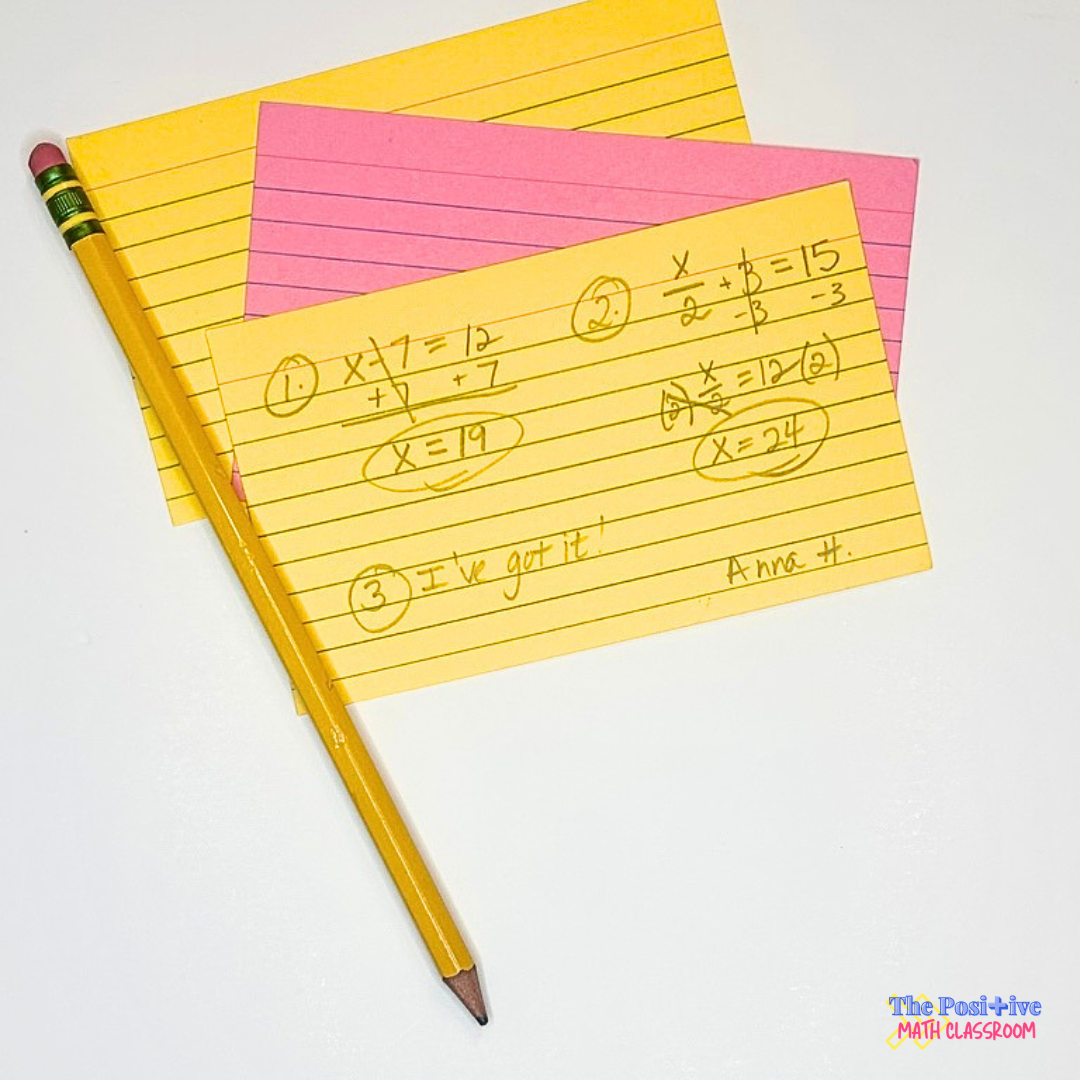
Now you have two pieces of information: what the student can actually do and how confident the student feels about doing it.
A stack of one-problem exit tickets is also much faster to look through than 25 worksheets. You can quickly sort them into piles and have a pretty good idea of who is ready to move on and who might need additional support tomorrow.
Give students either an index card or sticky note to write the problems. Sticky notes are my favorite way because students simply stick on the door as they leave the classroom. Click here to read about other ways to use sticky notes in your classroom.
5. Partner Work
This is another simple way to change the feel of ordinary math practice.
Pair students together and give them a short set of problems to complete as a team.
But here's the important part:
Both partners need to be able to explain the answer.
You can even randomly choose which partner explains a problem. That helps prevent one student from doing all the work while the other simply copies.
Another variation is to have partners solve problems independently first and then compare answers. If their answers don't match, they have to work together to determine where the mistake occurred.
You're still practicing the exact same math skill, but now students are also talking about their mathematical thinking. If students are successful working in pairs, think about giving Partner Quizzes.
6. Have Students Write the Quiz Question
Instead of answering all the questions, let your students become the teacher.
After practicing a skill, ask each student to:
Write one quiz-worthy problem.
Solve it.
Create an answer key.
Trade with a partner and solve their partner's problem.
You could also collect the questions and choose a few to use for a class review the following day.
Give students one important rule:
Your problem should be challenging enough to belong on a quiz, but it must be solvable using what we've learned.
Creating the problem requires students to think about the skill from a completely different perspective.
And let's be honest, middle schoolers usually enjoy the opportunity to try to stump their classmates!
7. Give Students Something to Solve Beyond the Math Problem
Sometimes students need one little reason to keep going.
Instead of: Solve these 12 integer problems.
turn it into:
Solve the problems to crack the code.
The actual math doesn't necessarily need to change.
Students can use their answers to:
Solve a riddle
Reveal a mystery word
Crack a code
Discover a secret message
Math riddle problems is one of my favorite ways to add a little fun to skills that simply require repetition and practice.
One of the easiest ways to make regular math practice feel more engaging is to turn it into a riddle. Start with the math problems you already want students to solve. Then assign a letter to each correct answer. As students work through the problems, they'll collect the letters they need to solve the riddle.
This works especially well with seasonal riddles. A Halloween joke, Thanksgiving riddle, or winter-themed question can make the exact same math practice feel a little more fun without adding a lot of prep for you.
Write the answers on the board or at the bottom of the worksheets.
The math is still the priority. The mystery just gives students a reason to want to find the answers.
Looking for riddles already done? Click here for more than 20 sets of middle school math riddle worksheets.
You Don't Have to Reinvent Math Practice
Making math practice more engaging doesn't mean every lesson needs to be a game.
In fact, I think that's an easy trap to fall into as a teacher. Sometimes students simply need to practice.
The goal isn't to eliminate practice. It's to find small ways to change how students experience it.
A worksheet becomes a scavenger hunt.
A regular problem becomes an error analysis question.
Fifteen assigned questions become ten student-selected questions.
A practice problem becomes part of a mystery.
And sometimes that small change is enough to get a few more students participating, thinking, and actually doing the math.
Pick just one of these ideas or read more fun ideas here and try it with a lesson you already have planned this week. You don't need to create anything new.